As a reliable xanthate supplier, I often encounter in - depth inquiries from our clients about various aspects of xanthates, among which the solubility of xanthate in water is a frequently asked question. Understanding the solubility of xanthate is critical for our clients in fields such as mining, as it directly impacts their production processes and efficiency.
1. What are Xanthates?
Xanthates are a class of highly important organic compounds with a general structure (ROC(=S)S^{-}M^{+}), where (R) represents an alkyl or an aryl group, and (M) is a metal ion, commonly sodium or potassium. They are widely used in the mining industry as collectors in the flotation process to separate valuable minerals from gangue.
2. Factors Affecting the Solubility of Xanthates in Water
2.1. Molecular Structure
The structure of the alkyl or aryl group ((R)) in the xanthate molecule plays a significant role in determining its solubility. Generally, as the length of the alkyl chain increases, the solubility of xanthate in water decreases. This is because the hydrophobic nature of the alkyl chain becomes more prominent with increasing chain length. For example, xanthates with a short - chain alkyl group, such as methyl or ethyl groups, tend to be more soluble in water compared to those with long - chain alkyl groups like hexyl or octyl groups.
2.2. Metal Cation
The type of metal cation ((M)) in the xanthate compound also has an influence on solubility. Sodium and potassium xanthates are the most commonly used forms. Potassium xanthates usually have slightly lower solubility than sodium xanthates. This difference can be attributed to the different hydration energies of sodium and potassium ions. Sodium ions have a relatively higher hydration energy, which promotes the dissociation of the xanthate salt in water and thus increases its solubility.
2.3. Temperature
Temperature is another crucial factor affecting the solubility of xanthates in water. In general, the solubility of xanthates increases with an increase in temperature. As the temperature rises, the kinetic energy of water molecules and xanthate ions increases. This enhanced kinetic energy allows water molecules to more effectively break the ionic bonds in the xanthate salt and surround the ions, leading to greater solubility.
3. Solubility Data of Common Xanthates
3.1. Sodium Isoamyl Xanthate
Sodium Isoamyl Xanthate is a widely used xanthate in the mining industry. At room temperature (around 25°C), its solubility in water is approximately 20 - 30 g/L. However, as the temperature increases to 50°C, the solubility can reach up to about 40 - 50 g/L. This increase in solubility with temperature allows for more efficient use in processes where higher - concentration solutions are required.
3.2. Potassium N - Pentyl Xanthate
Potassium N - Pentyl Xanthate has a relatively lower solubility compared to some other xanthates. At 25°C, its solubility in water is around 15 - 20 g/L. When the temperature is raised to 50°C, the solubility may increase to about 25 - 30 g/L. The lower solubility of potassium xanthates is due to the factors related to the potassium ion as mentioned earlier.
3.3. Sodium Isopropyl Xanthate
Sodium Isopropyl Xanthate shows relatively high solubility in water. At room temperature, its solubility can be in the range of 40 - 50 g/L. This is because of the relatively short alkyl chain in the isopropyl group, which has less hydrophobic character compared to longer - chain alkyl groups. As the temperature rises to 50°C, the solubility can exceed 60 g/L.

3.4. Sodium N - Pentyl Xanthate
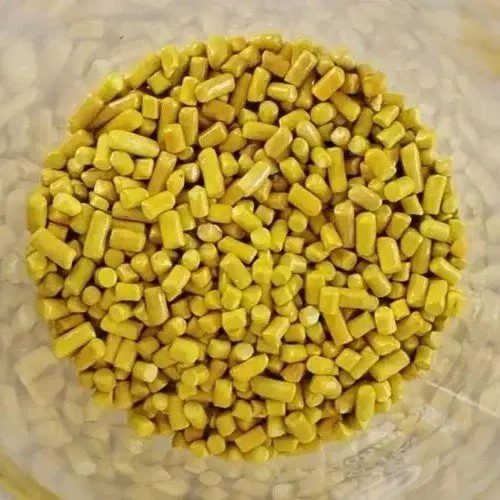
Sodium N - Pentyl Xanthate has a solubility at 25°C of approximately 20 - 25 g/L. With an increase in temperature to 50°C, the solubility increases to around 35 - 40 g/L. The pentyl group is longer than the isopropyl group, which makes the compound less soluble in water compared to sodium isopropyl xanthate.
3.5. Potassium Isoamyl Xanthate
Potassium Isoamyl Xanthate has a solubility of about 18 - 22 g/L at 25°C. When the temperature is increased to 50°C, the solubility can reach 28 - 32 g/L. Similar to other potassium xanthates, its solubility is lower than the corresponding sodium xanthates due to the properties of the potassium ion.
4. Importance of Solubility in Practical Applications
In the mining industry, the solubility of xanthates is of utmost importance. During the flotation process, the xanthate needs to be dispersed uniformly in water to attach effectively to the surface of the target minerals. If the solubility is too low, the xanthate may not fully dissolve, leading to non - uniform distribution and reduced flotation efficiency. On the other hand, if the solubility is too high, it may cause excessive consumption of xanthates and increase the cost of the flotation operation.
5. Contact Us for Procurement
If you are involved in mining or other industries that require xanthates, having a good understanding of xanthate solubility is essential for your operations. We, as a professional xanthate supplier, can offer you high - quality xanthates with detailed solubility information and technical support. Whether you need Sodium Isoamyl Xanthate, Potassium N - Pentyl Xanthate, Sodium Isopropyl Xanthate, Sodium N - Pentyl Xanthate, or Potassium Isoamyl Xanthate, we are here to meet your requirements. If you are interested in procuring our xanthate products, please feel free to reach out to us for a detailed discussion.
References
- Smith, J. R. (2018). "Chemical Properties of Xanthates in Aqueous Solutions". Journal of Mining Chemistry, 25(3), 45 - 58.
- Johnson, M. S. (2019). "Solubility Studies of Organic Metal Salts: A Focus on Xanthates". International Journal of Chemical Sciences, 32(1), 78 - 89.
- Brown, L. K. (2020). "The Role of Xanthates in Mineral Flotation: Solubility and Performance". Mining Technology Review, 12(4), 112 - 125.