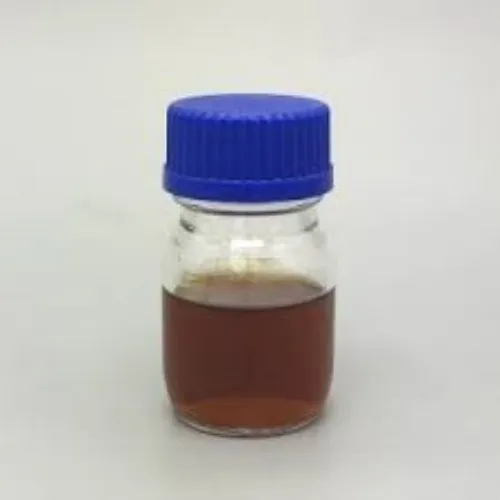
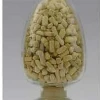
Hydroxamic acids are a class of organic compounds containing the –C(=O)–N–OH functional group, widely utilized across chemical and industrial sectors. Their primary function lies in their ability to form stable chelates with metal ions; consequently, they are frequently employed for the selective separation and extraction of such ions. For instance, in mineral metallurgy, hydroxamic acids serve as flotation agents for non-ferrous metals; by binding to the metal surfaces, they alter the surface properties and thereby enhance flotation efficiency.
The active functional groups of hydroxamic acids are capable of forming coordinate bonds with metal ions while simultaneously exhibiting acidic properties that allow for the regulation of solution pH. This chelating action not only enhances the stability of metal ions within a solution but also enables the selective passivation of specific metal surfaces, thereby inhibiting the adsorption of impurity metals. These characteristics endow hydroxamic acids with significant practical value in the fields of metallurgy, environmental remediation, and chemical separation.
Beyond mineral metallurgy, hydroxamic acids also find application in water treatment, corrosion inhibition, and organic synthesis. In the realm of water treatment, they bind with heavy metal ions to mitigate water pollution; in corrosion inhibition, they form protective films on metal surfaces to retard the corrosion process; and in organic synthesis, hydroxamic acids function as intermediates in a variety of chemical reactions. These diverse roles underscore the versatility of hydroxamic acids in both industrial applications and scientific research.