


Methyl Isobutyl Carbinol (MIBC) CAS 108-11-2 | Flotation Frother For Copper-Molybdenum Separation
Bitop Bihope Qingdao Mining Co., Ltd. is one of the most reliable manufacturers and suppliers of methyl isobutyl carbinol (mibc) cas 108-11-2 | flotation frother for copper-molybdenum separation in China, also supports customized service with low price. If you're going to buy advanced methyl isobutyl carbinol (mibc) cas 108-11-2 | flotation frother for copper-molybdenum separation made in China, welcome to get pricelist and free sample from our factory.
1. Product Identity
|
Item |
Details |
|
Chemical name |
4-Methyl-2-pentanol (4-methylpentan-2-ol) |
|
Trade name |
Methyl Isobutyl Carbinol, MIBC |
|
Other names |
Methyl amyl alcohol, isobutyl methyl carbinol, 1,3-dimethylbutanol, MAOH |
|
CAS number |
108-11-2 |
|
EINECS number |
203-551-7 |
|
Molecular formula |
C6H14O - (CH3)2CHCH2CH(OH)CH3 |
|
Molecular weight |
102.17 |
|
HS code |
2905199090 |
|
Transport |
UN 2053 (some references cite UN 2282), Class 3 flammable liquid, Packing Group III |
|
Origin |
China (exact domestic source is stated on the contract and customs documents) |
|
Main uses |
Frother for sulphide and coal flotation; solvent for coatings, printing inks and metalworking fluids; chemical intermediate |
Methyl Isobutyl Carbinol is a branched, six-carbon secondary alcohol and one of the most widely specified frothers in mineral processing. It is ordered against industrial-grade specifications and every batch ships with a certificate of analysis.
2. Appearance and Physical Properties
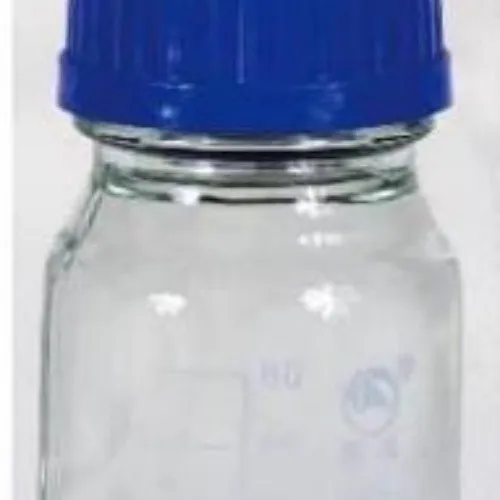
A clear, colourless liquid with a mild alcohol odour, free of visible mechanical impurities. Density 0.807–0.813 g/mL at 20 °C; boiling range 131–134 °C; melting point about −90 °C; flash point 41 °C (closed cup); refractive index n20/D 1.411–1.414; log P about 1.4. It is slightly soluble in water - roughly 2% at 20 °C - and miscible with ethanol, ether, acetone, esters and aliphatic or aromatic hydrocarbons.
The hydroxyl group sits mid-chain, which makes the molecule chemically mild: it holds up in neutral, acidic and strongly alkaline pulps, and its performance is not sensitive to pulp temperature or water hardness. It is incompatible with strong oxidisers, strong acids and acid chlorides and must be kept away from them. The product is readily biodegradable, which keeps tailings-water treatment simple.
3. Typical Specifications
|
Parameter |
Supply and customs specification |
Common industry grades (reference) |
|
Purity (GC), % min |
99.0 |
98.0 industrial; 99.5 high purity |
|
Moisture, % max |
0.20 |
0.20 industrial; 0.10 high purity |
|
Distillation range (130–135 °C), vol % min |
95.0 |
as above |
|
Density at 20 °C, g/mL |
0.807–0.813 |
0.805–0.815 |
|
Appearance |
Clear colourless liquid, free of visible impurities |
as above |
A batch certificate of analysis accompanies every shipment and states the measured purity and moisture. The right-hand column lists grades commonly traded in the industry and is given for reference only. Higher purity, lower moisture and bespoke packaging can be supplied against agreed specifications.
4. Frothing Performance
MIBC is the benchmark synthetic frother of the flotation industry: a branched aliphatic alcohol whose only functional group is the hydroxyl. It carries no collector group and has no collecting power of its own. Its job in the circuit is narrow and precise - generate bubbles, keep them fine and even, and let them break quickly.
In one sentence: very low additions produce a fine, brittle froth that keeps gangue and slimes out of the concentrate.
Frothing speed: fast, with a high volume of fine, uniformly sized bubbles;
Froth character: fine, thin-walled and brittle - the froth collapses quickly in the launder and does not cling to cell walls or pipes;
Selectivity: high. Because the froth is not sticky, gangue and locked particles drain back into the pulp instead of being entrained, so concentrate grades run higher;
Froth stability: moderate, which keeps froth depth and pulp level easy to control and suits automated reagent dosing;
Handling: slightly soluble in water, so it can be dripped in neat or emulsified for accurate dosing; it stays fluid at low ambient temperatures and pumps cleanly;
Robustness: performance is largely unaffected by pulp pH from acidic to strongly alkaline, by pulp temperature or by water hardness; it is readily biodegradable;
Compatibility: it does not adsorb on mineral surfaces and does not interfere with xanthates, dithiophosphates or thionocarbamates, so it can be combined with any collector scheme.
The mechanism is straightforward. One end of the molecule is a polar hydroxyl group and the other is a hydrophobic isobutyl chain. At the air–water interface the molecules orient themselves into a monolayer of moderate strength: strong enough to break the air stream into a mass of fine bubbles and to give them a useful residence time in the pulp, but not so strong that the froth becomes viscous and over-stable. That balance is what "brittle froth" means in practice, and it is the reason entrainment stays low and concentrate grades stay high.
MIBC compared with pine oil (No. 2 oil)
|
Item |
MIBC |
Pine oil (No. 2 oil, mainly α-terpineol) |
|
Origin and composition |
Synthetic, single component, 98–99% purity |
Hydrated turpentine, 40–60% terpene alcohols, batch-to-batch variation |
|
Frothing power |
Strong; fine, even bubbles |
Moderately strong |
|
Froth character |
Fine, thin-walled, brittle, breaks quickly |
Larger, stickier, more persistent |
|
Selectivity / entrainment |
High; little slime or water carry-over, higher concentrate grade |
Lower; slimes and water tend to be entrained |
|
Collecting action |
Essentially none, apart from a very slight effect on naturally hydrophobic minerals such as molybdenite and graphite |
Noticeable collecting effect on talc, molybdenite and coal |
|
Typical dosage |
10–100 g/t, most circuits 20–60 g/t |
20–100 g/t, higher consumption |
|
Odour |
Mild, easier on the plant environment |
Strong turpentine smell |
|
Environmental profile and downstream handling |
Readily biodegradable; froth breaks easily, thickening and filtration run smoothly |
Poorly biodegradable; sticky froth, difficult dewatering, higher tailings-water load |
|
Low-temperature handling |
Stays fluid, easy to pump and dose automatically |
Viscous when cold, dosing drifts |
|
Price |
Higher per tonne |
Lower per tonne |
|
Typical duty |
Cleaning stages, high-grade circuits, copper-molybdenum separation, automated plants |
Rougher and scavenger duty, high-tonnage low-cost operations |
In fairness, pine oil is cheaper and gives a more persistent froth, and it does collect some naturally floatable minerals, so it retains a cost advantage in high-tonnage rougher and scavenger circuits. MIBC pays off where concentrate grade, stable dosing and clean operation matter. Many plants blend the two - MIBC to tune froth behaviour, No. 2 oil to control cost.
Copper-molybdenum separation
Copper-molybdenum separation (molybdenite flotation with copper depressed) is a multi-stage, multi-regrind duty in which froth behaviour decides the result. A sticky froth drags copper minerals and fine gangue back into the molybdenum concentrate, pushing up the copper assay and making thickening and filtration difficult downstream. MIBC's fine, brittle froth breaks down promptly in the cleaning stages, keeps the froth column from packing and gives both a cleaner molybdenum concentrate and easier dewatering - which is why it is widely specified for copper-molybdenum cleaning circuits and fine-particle selective flotation.
5. Where It Is Used
Copper and copper-molybdenum sulphide ores: copper-molybdenum separation (molybdenite flotation) cleaning stages and copper concentrate re-cleaning;
Copper-lead-zinc polymetallic sulphides: the standard frother in rougher, scavenger and cleaner stages alongside xanthate and dithiophosphate collectors;
Molybdenum, nickel, gold and silver sulphide flotation where concentrate grade and dewatering behaviour have to be controlled;
Coal slurry flotation and a range of non-sulphide flotation circuits as a general-purpose frother;
Fine-particle feeds and high-grade cleaning duties that demand selective flotation.
6. Recommended Practice
Dosage: typically 10–100 g/t, with most circuits running 20–60 g/t. Ore mineralogy, pulp density, the collector scheme and the target grade all move the figure, so confirm the optimum with a bench flotation test and then fine-tune on the plant against froth depth and concentrate grade.
Addition: drip the neat product with a micro-dosing pump, or feed it as a 1–5% emulsion for tighter control. Emulsions separate on standing - stir before use.
Addition points: mill discharge, conditioner or the front of the flotation cell. Split dosing across rougher, scavenger and cleaner usually beats a single addition.
With collectors: the frother does not compete for mineral surface sites, so it works with xanthates, dithiophosphates and thionocarbamates alike. Add collector first, frother second, so froth behaviour can be read and adjusted.
Pulp pH: works across a wide window - neutral to strongly alkaline (pH 7–12) - and is not affected in practice by water hardness or temperature.
Overdosing: too much frother gives excessive froth volume, a deep and unmanageable froth column, cell overflow and a drop in concentrate grade with harder dewatering. Cut the dose and check the collector scheme.
Blending: can be combined with No. 2 oil or glycol ether frothers to balance cost against froth performance.
7. Packaging, Storage and Transport
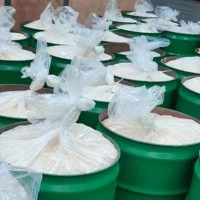
Standard packing is 165 kg / 160 kg steel drums with an internal liner, 200 kg plastic drums and 830 kg IBCs; bulk road tanker delivery and customised small packs are available on request.
Store in a cool, dry, ventilated, shaded warehouse away from fire, heat sources and direct sunlight, with containers kept sealed and properly earthed against static. Do not store next to strong oxidisers or strong acids, and keep the product away from food and feed. Sealed in the dark, the product is best used within 24 months; the batch certificate of analysis takes precedence.
The product is a Class 3 flammable liquid (UN 2053, Packing Group III; some references cite UN 2282 - the third-party transport assessment certificate and customs documents take precedence). Vehicles must be fitted with flame arresters; do not use spark-producing tools during loading or unloading, and never ship with oxidisers or foodstuffs. Protect from direct sun, rain and high temperature, and keep away from ignition sources. HS code 2905199090.
8. Safety
MIBC is a flammable liquid with a closed-cup flash point of 41 °C, and its vapour can form explosive mixtures with air; ignition sources, hot surfaces and static sparks are a real hazard. No smoking or open flames in storage, transfer or dosing areas. Use explosion-proof electrical equipment and provide static earthing.
The liquid irritates eyes, skin and the respiratory tract, and high vapour concentrations can cause dizziness, throat irritation and coughing. Wear goggles, solvent-resistant gloves and a respirator, and ventilate the working area.
Skin contact: remove contaminated clothing and wash with soap and plenty of water;
Eye contact: hold the eyelids open and flush with plenty of water for at least 15 minutes, then seek medical attention if irritation persists;
Inhalation: move the person to fresh air, keep the airway clear and obtain medical advice if symptoms continue;
Ingestion: do not induce vomiting - seek medical attention immediately.
For fire, use alcohol-resistant foam, dry powder, carbon dioxide or water spray. A direct water jet can spread the burning liquid. In the event of a spill, remove all ignition sources, ventilate the area, absorb the liquid with sand or another inert material into a sealed container and keep it out of drains and waterways.
9. FAQ
Is MIBC a collector or a frother? A frother. It has no collector group and cannot replace xanthate or dithiophosphate collectors. Its role is to make the bubbles fine, even and brittle so that the minerals the collector has rendered hydrophobic can be floated and recovered.
MIBC or pine oil (No. 2 oil)? Pine oil is cheaper and holds a more persistent froth, and it collects some naturally floatable minerals, so it still wins on cost in high-tonnage rougher and scavenger circuits. MIBC costs more per tonne but doses lower, is a single-component product, gives a brittle froth with little entrainment, has a mild odour and is easy to dose automatically - which is why it dominates high-grade cleaning, copper-molybdenum separation and automated plants. Many operations blend the two.
Why is a brittle froth such an advantage? A sticky froth carries gangue slimes and water into the concentrate, which lowers the grade and makes thickening and filtration harder. A brittle froth collapses as it reaches the launder, so entrainment stays low, grade stays high and dewatering is straightforward.
How do I set the dosage? Start from 10–100 g/t, with most circuits landing between 20 and 60 g/t. The right figure depends on ore mineralogy, pulp density and the collector scheme, so run a bench test and then adjust on site against froth depth and concentrate grade. It is better to under-dose and top up than to overdose once.
Does it need to be diluted? No. It is slightly soluble in water and can be dripped in neat. Where tighter metering is needed, prepare a 1–5% emulsion and stir it before use.
Is it classified as dangerous goods? Yes. It is a Class 3 flammable liquid, Packing Group III, most commonly listed as UN 2053, with UN 2282 appearing in some references. Customs and transport classification follow the third-party transport assessment certificate and the customs documents.
Hot Tags: methyl isobutyl carbinol (mibc) cas 108-11-2 | flotation frother for copper-molybdenum separation, China methyl isobutyl carbinol (mibc) cas 108-11-2 | flotation frother for copper-molybdenum separation manufacturers, factory, beneficiation frother reagent, industrial pine oil, mining frothing agent, natural pine oil chemical, pine oil flotation frother, terpene based frother
Previous
No InformationYou Might Also Like
Send Inquiry