


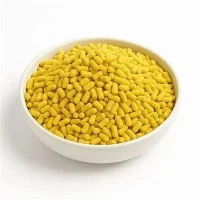

Phosphorus Pentasulfide (P₂S₅)
Bitop Bihope Qingdao Mining Co., Ltd. is one of the most reliable manufacturers and suppliers of phosphorus pentasulfide (p₂s₅) in China, also supports customized service with low price. If you're going to buy advanced phosphorus pentasulfide (p₂s₅) made in China, welcome to get pricelist and free sample from our factory.
Phosphorus pentasulfide, formula P₂S₅ (existing as the molecular tetramer P₄S₁₀), CAS 1314-80-3, molecular weight 222.27, is a light-yellow to yellow-green crystalline solid. As the key phosphorus-sulfur raw material for dialkyl dithiophosphates and their salts, it serves organophosphorus pesticides, lubricating oil additives, ore flotation reagents, pharmaceuticals and fine chemicals.
Main application fields: 1. Organophosphorus pesticides: for synthesis of thiophosphate ester insecticide, acaricide and fungicide actives. P₂S₅ reacts with alcohols or phenols to form dialkyl dithiophosphoric acids, further chlorinated and esterified into the active skeleton of organophosphorus pesticides; the P=S group governs efficacy, selectivity and degradation. Raw-material S/P ratio and purity determine active content and by-products; higher yields lower overall cost. 2. Lubricating oil additives (ZDDP): anti-wear and anti-oxidant additives for engine, gear and hydraulic oils. Alcoholysis of P₂S₅ yields dialkyl dithiophosphoric acids, converted with zinc salts into ZDDP which forms a protective film on metal surfaces and inhibits oxidation. Low iron content (tested 0.006%) prevents oil darkening; dual yields directly determine additive performance and cost. 3. Ore flotation reagents: phosphorus-sulfur source for dithiophosphate (black-type) collectors used in selective flotation of copper, lead and zinc sulfide ores. High purity and stable S/P ratio support consistent collector quality and complement our finished products such as ammonium dibutyl dithiophosphate, forming a "raw material + finished reagent" supply system. 4. Pharmaceuticals and fine chemicals: as an efficient sulfidizing reagent, converting carbonyls into thiocarbonyls or activating hydroxyls for sulfur-containing drug intermediates and fine chemicals; low impurities reduce purification steps and raise yields. 5. Rubber chemicals: supplies the sulfur source for vulcanization accelerators and sulfur-containing auxiliaries, improving crosslink density and performance. 6. Traditional and basic uses: matches, ore analysis reagents and laboratory sulfidization maintain steady demand.
Chemistry basis: written with the empirical formula P₂S₅, the compound actually exists as the cage-shaped tetramer P₄S₁₀ with phosphorus atoms linked through bridging sulfur. Its central chemical value lies in alcoholysis - reacting with alcohols it forms dialkyl dithiophosphoric acids (RO)₂P(S)SH, the common backbone of ZDDP anti-wear additives, thiophosphate pesticide intermediates and dithiophosphate collectors. Conversion efficiency depends on purity, the S/P ratio and particle morphology; this product characterizes reactivity through diethyl and diisobutyl dithiophosphate yield indicators.
Physical and chemical properties: pure material melts at 286–290℃ (this batch tested 278℃, meeting contract spec ≥274℃) and boils at 514℃; relative density 2.03; bulk density 900–1100 kg/m³; triclinic crystal system. Insoluble in cold water, decomposed by hot water; sparingly soluble in carbon disulfide; dissolves in sodium hydroxide forming sodium thiophosphate. Deliquescent and moisture-sensitive; ignites on friction or impact; hydrolyzes in water to phosphoric acid liberating hydrogen sulfide.
Manufacturing: direct combination of yellow phosphorus and sulfur (P₄ + 10S → 2P₂S₅), with melt feeding, cooling and rotary-drum flaking; flake thickness 0.4 mm.
Quality: manufactured to GB/T 13258-2016; batch report BTBH-20261027-001, batch 20261027A, batch size 8.700 TO; key tested values: total phosphorus 27.6%, sulfur 71.9%, final melting point 278℃, melting range 2.8℃, sublimation residue 0.30%, iron 0.006%, diethyl dithiophosphate yield 95%, diisobutyl dithiophosphate yield 94%, flake thickness 0.4 mm. Conclusion: qualified.
Safety and compliance: UN 1340, Class 4.3 (emits flammable gases on contact with water), Packing Group II; dust may form explosive mixtures in air; LD50 389 mg/kg (rat, oral); HS code 2813900010; CAS/EINECS 1314-80-3/215-242-4. Supplied in sealed PE-lined packaging bearing flammable-goods marking; store in a dry, ventilated warehouse away from moisture, heat and impact; never co-store with oxidizers; declare as Class 4.3 dangerous cargo for export.
|
Test Item |
Contract Spec |
Test Result |
|
Total phosphorus (P)/% |
27.3–28.3 |
27.6 |
|
Sulfur (S)/% |
71.0–72.5 |
71.9 |
|
Final melting point/℃ |
≥274 |
278 |
|
Melting range/℃ |
≤3.0 |
2.8 |
|
Sublimation residue/% |
≤0.40 |
0.30 |
|
Iron (Fe)/% |
≤0.01 |
0.006 |
|
Diethyl dithiophosphate yield/% |
≥92 |
95 |
|
Diisobutyl dithiophosphate yield/% |
≥93 |
94 |
|
Flake thickness/mm |
≤0.5 |
0.4 |
|
Appearance |
Yellow to yellow-green flakes |
Yellow-green flakes |
|
Melting point (literature) |
- |
286–290℃ (pure) |
|
Boiling point (literature) |
- |
514℃ |
|
Relative density |
- |
2.03 |
Hot Tags: phosphorus pentasulfide (p₂s₅), China phosphorus pentasulfide (p₂s₅) manufacturers, factory
Previous
No InformationYou Might Also Like


Send Inquiry