


AMMONIUM DIBUTYL DITHIOPHOSPHATE (Dithiophosphate BA) CAS 1533-42-2 | High-Selectivity Flotation Collector
Bitop Bihope Qingdao Mining Co., Ltd. is one of the most reliable manufacturers and suppliers of ammonium dibutyl dithiophosphate (dithiophosphate ba) cas 1533-42-2 | high-selectivity flotation collector in China, also supports customized service with low price. If you're going to buy advanced ammonium dibutyl dithiophosphate (dithiophosphate ba) cas 1533-42-2 | high-selectivity flotation collector made in China, welcome to get pricelist and free sample from our factory.
2. Appearance and Chemical Behaviour
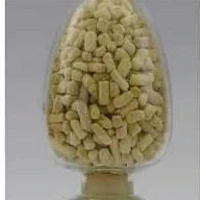
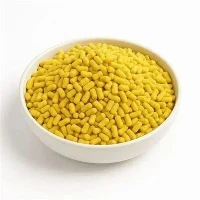
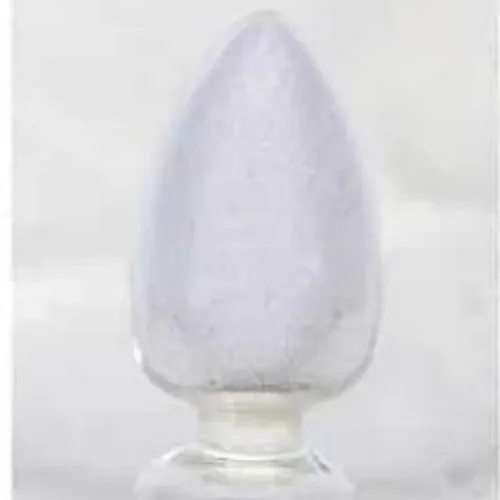
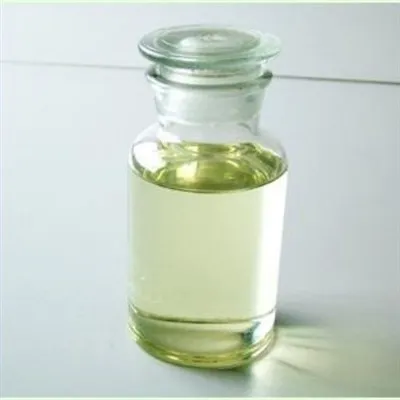
Off-white to pale grey granules or powder, occasionally with a faint pink cast, and odourless. It dissolves freely in water to give a turbid solution; a 1% solution reads pH 5.8–6.5. The salt is deliquescent and cakes after prolonged exposure to air - caking does not affect flotation performance, but the material must be free of mechanical impurities. It holds up well in neutral and mildly alkaline pulps and breaks down under strongly acidic or strongly alkaline conditions. Sealed dry storage gives a 24-month shelf life.
3. Typical Specifications
|
Parameter |
Supply and customs specification |
YS/T 278-2011 grade reference |
|
Active mineral-processing substance, % min |
90.0 |
95.0 (superior grade); 91.0 (standard grade) |
|
Moisture, % max |
10.0 |
The standard is stricter for dried grades (typically 2.0 max) |
|
Water-insoluble matter, % max |
per contract, normally 1.2 max |
0.5 (superior grade); 1.2 (standard grade) |
|
Appearance |
White to off-white granules or powder, free of mechanical impurities |
as above |
|
pH of 1% solution (typical) |
5.8–6.5 |
5.8–6.5 |
A batch certificate of analysis accompanies every shipment and states the measured active-substance content and moisture. The right-hand column reproduces the YS/T 278-2011 grade values for reference only: that standard does not contain a grade with a 10% moisture ceiling - its dried grades call for lower moisture and higher active content. Higher content, lower moisture, and bespoke particle size or packaging can be produced against agreed specifications.
4. Flotation Performance
Dithiophosphate BA belongs to the dithiophosphate (aerofloat-type) family. Its molecule carries a dithiophosphate group together with an ammonium counter-ion, which gives the reagent two jobs at once: film formation on sulphide surfaces and a usable frothing action of its own.
The trade-off is deliberate. Against a xanthate of similar chain length, this reagent gives up collecting strength and buys selectivity:
Collecting power: medium-low, below that of xanthate;
Selectivity: excellent, clearly ahead of xanthates and thiocarbamates;
Pyrite and pyrrhotite: barely collected in mildly alkaline pulp, so iron sulphide dilution is largely self-suppressed;
Galena, chalcopyrite, silver and nickel minerals: strongly collected, with rapid film formation;
Frothing: low to medium, brittle and fast-breaking, so added frother can be trimmed or dropped.
Chemically, the dithiophosphate group forms stable chelate-type insoluble salts with Cu(II), Pb(II) and Ag(I) and builds a hydrophobic film on those surfaces quickly, while its affinity for iron is weak. In practice this lets copper-sulphur and lead-sulphur separations run cyanide-free with lime as the only pyrite depressant, cutting both depressant and frother consumption.
Plant results bear this out: in lead-priority circuits on copper-lead-zinc polymetallic ores, lead concentrates are routinely held above 65% Pb while zinc contamination stays below 3%.
How it compares with xanthate
|
Item |
Dithiophosphate BA (B2-03) |
Xanthate (amyl xanthate type) |
|
Reagent family |
Dithiophosphate |
Xanthate |
|
Collecting power |
Medium-low |
Strong |
|
Selectivity |
Excellent |
Moderate |
|
Pyrite / pyrrhotite response |
Very weak in mildly alkaline pulp |
Strong, prone to entrainment |
|
Frothing action |
Built in, low to medium; brittle froth |
Essentially none; frother required |
|
Best pulp pH |
7.5–10.5 |
7.5–11 |
|
Typical duty |
Cleaning and separation stages, refractory polymetallic and Ni-Sb ores |
Rougher and scavenger stages |
|
Associated precious metals |
Helps recover platinum, gold and silver |
Recovery depends on the host sulphide |
5. Ore Types and Flowsheets
Copper, lead and silver sulphides, plus sphalerite activated with copper sulphate;
Nickel and antimony sulphides, including refractory nickel sulphide ores, sulphide-oxide nickel blends and sulphide-gangue middlings;
Platinum, gold and silver associated with sulphides, recovered into copper-lead concentrates;
Flowsheets where it earns its place: copper-lead separation, lead-zinc separation, copper-sulphur separation, nickel flotation and lead-priority routes on ores carrying high iron sulphide.
6. Recommended Practice
Pulp pH 7.5–10.5, adjusted with lime to depress pyrite and unactivated sphalerite; stay clear of strongly alkaline pulp above pH 11 and keep the circuit out of the acidic range.
Rougher additions normally fall between 25 and 80 g/t. The figure moves with ore mineralogy, circuit position and target mineral, so confirm the optimum by bench flotation.
Feed as a 1–5% aqueous solution prepared fresh; do not hold dilute solutions for extended periods.
Combine with depressants such as sodium thioglycolate, or with thionocarbamates (for example isopropyl ethyl thionocarbamate), in a composite reagent scheme.
Position it behind the xanthate: xanthate does the heavy rougher and scavenger collecting, dithiophosphate takes over in cleaning and separation where selectivity decides concentrate grade.
Because the reagent froths on its own, pine oil or MIBC additions can usually be trimmed; set the final figure from the froth depth in the cell.
7. Packaging, Storage and Transport
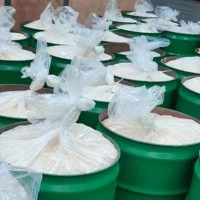
Steel drums with an internal liner at 40/100/120/125/130/150 kg net, laminated woven bags at 40/50 kg, wooden cases at 680/850 kg and 1000 kg IBCs, with custom packing on request. Store sealed in a cool, dry, ventilated warehouse - never in the open - away from fire, heat, acids, alkalis and strong oxidising agents, and apart from food or feed. Reseal opened packaging and consume it promptly. Shelf life is 24 months in sealed dry storage; the batch certificate of analysis takes precedence. Ship in clean, covered trucks or vessels with protection from moisture, rain, sunlight and fire, and do not stow the drums upside down. HS code 2920190090; transport classification (general cargo or dangerous goods) follows the third-party transport assessment certificate.
8. Safety
The dust is mildly acidic and irritates skin, eyes and the respiratory tract. Wear a dust mask, rubber gloves and goggles, and ventilate the working area. Flush contacted skin or eyes with plenty of water for at least 15 minutes and seek medical attention if irritation persists. Keep ignition sources away from storage and dosing areas, and never store the product next to strong acids or alkalis - decomposition releases irritating gas. Collect spillage with sand or another inert absorbent into a sealed container and keep it out of drains.
9. FAQ
Dithiophosphate BA costs more than xanthate - is it worth it? On price per tonne, no; on cost per tonne of concentrate, usually yes. In polymetallic circuits the higher concentrate grade, lower depressant and frother consumption and improved platinum, gold and silver recovery generally outweigh the reagent premium. Run a bench comparison on your own ore before deciding.
Can it replace xanthate completely? No. Collecting power is medium-low, so rougher and scavenger duty is still best handled by a xanthate such as SAX, PAX or SBX. The usual arrangement is xanthate up front and dithiophosphate in cleaning and separation.
Why does it leave pyrite alone? The dithiophosphate group binds strongly to Cu(II), Pb(II) and Ag(I) but only weakly to iron, so in mildly alkaline pulp it never builds a hydrophobic film on pyrite or pyrrhotite. Iron sulphides stay in the tailings instead of being dragged into the concentrate.
Do I still need a frother? The reagent froths by itself, producing a low to medium, brittle froth. Most circuits cut the frother dose and some run without adding any. Set the final value from froth depth and concentrate grade on site.
The material has caked in the bag - is it still usable? Yes. Caking does not affect flotation performance; break it up and feed as normal. Moisture does rise, so recalculate the dose on a dry basis.
Why do I see different CAS numbers for this product? Customs declaration for this product uses CAS 1533-42-2, which is the number carried on our customs elements, contracts and shipping documents. Some technical databases also list 53378-51-1 and other numbers for dithiophosphate products. Keep 1533-42-2 consistently in enquiries, purchase orders and customs paperwork, and confirm the numbering with your supplier before cross-referencing other technical files.
Hot Tags: ammonium dibutyl dithiophosphate (dithiophosphate ba) cas 1533-42-2 | high-selectivity flotation collector, China ammonium dibutyl dithiophosphate (dithiophosphate ba) cas 1533-42-2 | high-selectivity flotation collector manufacturers, factory, Ammonium Dibutyldithiophosphate, dithiophosphate collector reagent, flotation collector reagent, metal sulfide flotation chemical, Sodium Dibutyldithiophosphate, sodium dithiophosphate 25
Previous
No InformationYou Might Also Like
Send Inquiry