


Potassium Amyl Xanthate (PAX) CAS 2720-73-2
Bitop Bihope Qingdao Mining Co., Ltd. is one of the most reliable manufacturers and suppliers of potassium amyl xanthate (pax) cas 2720-73-2 in China, also supports customized service with low price. If you're going to buy advanced potassium amyl xanthate (pax) cas 2720-73-2 made in China, welcome to get pricelist and free sample from our factory.
1. Product Identity
Potassium amyl xanthate, also written potassium pentyl xanthate and abbreviated PAX, is the potassium salt of O-pentyl dithiocarbonate. CAS number 2720-73-2, EINECS 220-329-5, molecular formula C6H11KOS2, molecular weight 202.37, density about 1.073 g/cm³ at 25 °C. The product is classified under HS code 2930902000.
2. Properties
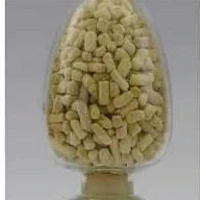
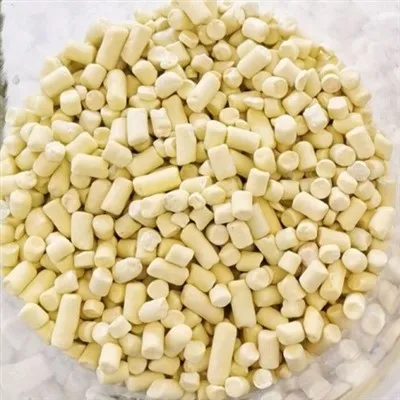
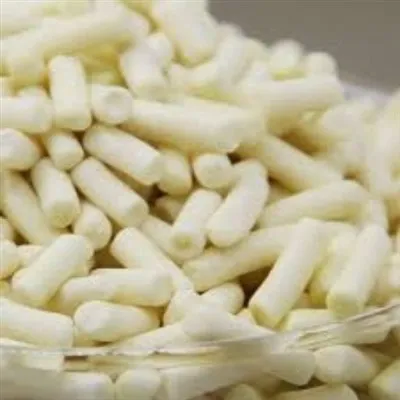
PAX is a pale yellow to yellow powder with a pungent odour and good solubility in water, giving a weakly alkaline solution. Because the potassium salt dissolves faster than the corresponding sodium salt, it is often the preferred grade where pulp temperatures run low - winter operations in northern mines are a typical example - or where reagent make-up time is tight. The solid is hygroscopic and will cake and slowly decompose if left exposed. Kept dry and sealed it is stable, but acid contact causes rapid breakdown with evolution of carbon disulphide and hydrogen sulphide, strong oxidisers deactivate it, and heat or prolonged light exposure shortens its life.
Under GHS the substance is classified as a flammable solid (H228), harmful if swallowed or in contact with skin (H302, H312), irritating to skin, eyes and the respiratory tract (H315, H319, H335) and hazardous to aquatic life with long-lasting effects (H411); the signal word is Warning. In practice these hazards are managed through ventilation, dust control and fire precautions.
3. Specifications
|
Parameter |
Granular |
Powder |
|
Active content, % min |
90.0 |
90.0 |
|
Free alkali, % max |
0.2 |
0.2 |
|
Moisture and volatiles, % max |
4.0 |
4.0 |
|
Shelf life, months |
12 |
12 |
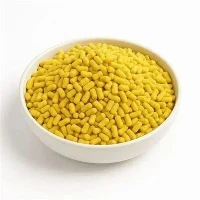
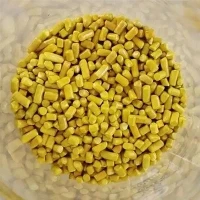
Granular and powder grades carry the same active content. The difference is practical: powder dissolves quickly and suits solution make-up, while granules flow well, generate less dust and are easier to handle mechanically over long distances. Special specifications can be supplied against an agreed technical protocol.
4. Applications
PAX is one of the stronger collectors available for sulphide flotation and is chosen for refractory, dense or high-sulphur ores. Typical duties include:
Copper, lead and zinc sulphide ores, especially polymetallic ores in roughing and scavenging;
Nickel sulphide and copper-nickel sulphide ores;
Gold and silver ores of the sulphide type, including gold associated with pyrite;
Molybdenum and molybdenum-bearing sulphide ores;
Oxidised ores that have been conditioned with a sulphidising agent.
The reagent performs reliably in weakly alkaline pulps between pH 7.5 and 11 and combines well with dithiophosphates, thionocarbamates and frothers. Its longer carbon chain means stronger adsorption than ethyl or butyl xanthates: less reagent is needed, flotation is faster and recovery gains are clear. Selectivity, however, is only moderate, and the product is not intended for oxidised ores, strongly acidic pulps, or non-metallic feeds such as coal, fluorspar and quartz.
5. PAX or Sodium Amyl Xanthate?
Both share the same collecting group; the difference sits with the counter-ion. The potassium salt dissolves faster and more completely, which shortens reagent make-up and gives steadier behaviour at low pulp temperatures - useful where the pulp runs cool or the dosing line is short. The sodium salt usually costs less and suits high-volume, price-sensitive operations. If a plant sees incomplete dissolution or sluggish response after dosing, a potassium-for-sodium substitution trial is a sensible first step before comparing cost.
6. Packaging, Storage and Transport
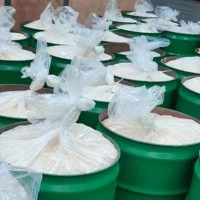
Regular packing is a 120 kg steel drum, a 50–60 kg woven bag or a 25 kg fibre drum, with custom options available. Store in a ventilated, cool, dry place, protected from moisture, sunlight and ignition sources, and keep away from toxic or incompatible materials. Once a package is opened, use it promptly and reseal what remains. Shelf life is 12 months in sealed dry storage. As a flammable solid, the product must be kept away from heat and flame during transport and handling, and packaging must be protected from damage and moisture.
7. Safety
Wear a dust mask, protective gloves and goggles; no smoking or open flames, and keep the area ventilated. Flush contacted skin with plenty of water, rinse splashes from the eyes immediately and seek medical attention, and move anyone affected by dust inhalation to fresh air. Collect spillage with sand or an inert absorbent and dispose of it in sealed containers; do not wash it into drains. Use dry powder, sand or carbon dioxide for extinguishing; avoid a solid water jet on the material.
8. FAQ
Why do some plants specify the potassium grade? Usually because of site conditions - low pulp temperature, short reagent lines or a need for fast dissolution.
Granular or powder? Choose granular where automatic dosing and dust control matter; choose powder where solutions are prepared quickly and dosing accuracy is critical.
Will it float oxidised ore? Only after thorough sulphidisation with sodium sulphide or sodium hydrosulphide. Avoid strongly acidic pulps, where the reagent decomposes.
Hot Tags: potassium amyl xanthate (pax) cas 2720-73-2, China potassium amyl xanthate (pax) cas 2720-73-2 manufacturers, factory
You Might Also Like

Send Inquiry