

Potassium Isoamyl Xanthate (PIAX) CAS 928-70-1 | Selective Flotation Collector
Bitop Bihope Qingdao Mining Co., Ltd. is one of the most reliable manufacturers and suppliers of potassium isoamyl xanthate (piax) cas 928-70-1 | selective flotation collector in China, also supports customized service with low price. If you're going to buy advanced potassium isoamyl xanthate (piax) cas 928-70-1 | selective flotation collector made in China, welcome to get pricelist and free sample from our factory.
1. Product Identity
Potassium isoamyl xanthate, abbreviated PIAX (also written IAX or KIAX), is the potassium salt of O-(3-methylbutyl) carbonodithioate. CAS number 928-70-1, EINECS 213-180-2, molecular formula C6H11KOS2, molecular weight 202.38, density approximately 1.071 g/cm³. HS code 2930902000.
2. Where It Fits
This grade combines two features that rarely arrive together: the selectivity of a branched isoamyl group and the dissolution behaviour of a potassium salt. The branched alkyl group moderates how the collector interacts with different mineral surfaces, while the potassium counter-ion disperses quickly in the pulp. For circuits that need firm control over concentrate grade without complicating reagent make-up, it is often the most practical middle option. It is regularly specified for separation stages in copper-lead-zinc plants, cleaning stages in copper-nickel plants and scavenging duties on gold-silver sulphide ores.
3. Properties
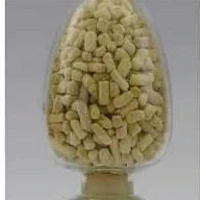
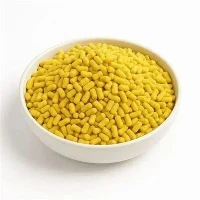
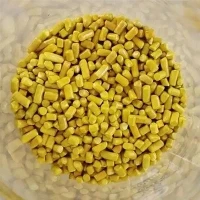
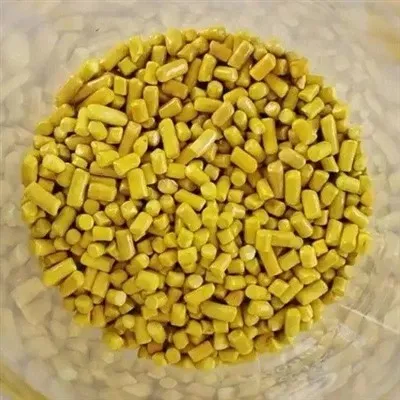
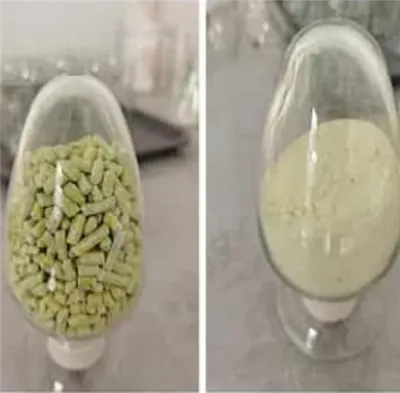
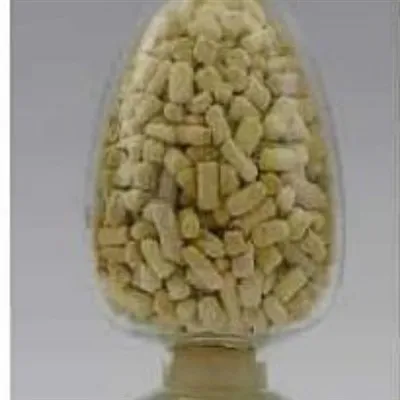
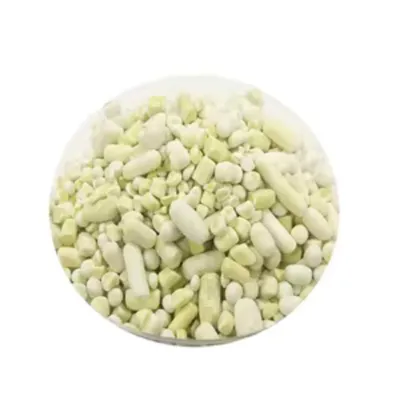
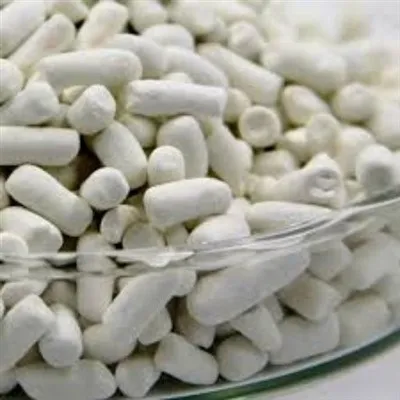
Supplied as pale yellow or grey-white powder or granules with a pungent odour, readily soluble in water and strongly hygroscopic; the solution is weakly alkaline. Dissolution is faster than that of the corresponding sodium salt and incomplete dissolving at low pulp temperatures is less of an issue. Relative to n-amyl grades, the selectivity advantage of the branched structure is the notable difference. Dry sealed material is stable at ambient temperature, decomposition accelerates above 60 °C, acid contact causes rapid breakdown with release of carbon disulphide and hydrogen sulphide, strong oxidisers deactivate the reagent, and aqueous solutions hydrolyse slowly - prepare them fresh.
4. Specifications
|
Parameter |
Value |
|
Active content, % min |
90.0 |
|
Free alkali, % max |
0.2 |
|
Moisture and volatiles, % max |
4.0 |
|
Appearance |
Pale yellow or grey-white powder / granule |
|
Shelf life |
12 months |
5. Applications
Separation and cleaning of copper-lead-zinc polymetallic sulphide ores, raising concentrate grade and limiting gangue flotation;
Cleaning circuits in copper-nickel plants, with stable collection of pentlandite;
Gold and silver sulphide ores and gold-bearing pyrite, balancing recovery against selectivity;
Oxidised copper and lead-zinc ores conditioned with sodium sulphide, plus oxidised copper minerals such as malachite and azurite;
Complex flowsheets where circulating load must be contained and froth behaviour kept steady.
Against potassium amyl xanthate the collecting strength is slightly lower, but flotation runs more evenly. The froth is moderately brittle and breaks down readily, which makes concentrate grade easier to hold. On intergrown polymetallic ores whose minerals float at similar rates, that translates into less lead-zinc cross-contamination and lower downstream smelting costs.
6. Recommended Practice
The reagent operates between pH 7.5 and 11. Dosage depends on ore mineralogy, with 25–150 g/t typical in roughing and lower additions in cleaning. Prepare a 1–5% aqueous solution and feed it evenly to avoid local over-concentration. On oxidised ores, complete sulphidisation before adding xanthate. Combinations with dithiophosphates, thionocarbamates and frothers are routine, and in copper-lead separation, pairing the reagent with a depressant is standard practice.
7. Packaging, Storage and Transport
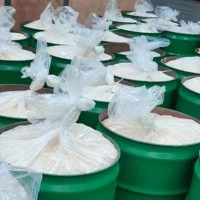
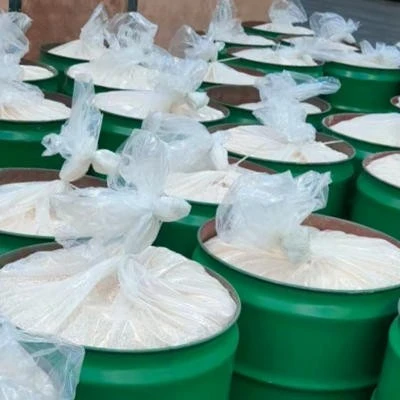
Regular packing includes 120 kg steel drums, 50–60 kg woven bags and 25 kg fibre drums, with custom options on request. Store in a ventilated, cool, dry warehouse free of moisture, direct sunlight and ignition sources, segregated from acids, oxidisers and toxic materials. Use opened packages promptly and reseal the remainder tightly. Shelf life is 12 months in sealed dry storage. Keep away from heat and flame during transport and protect packaging from damage, moisture and rain.
8. Safety
Dust irritates the respiratory tract, skin and eyes. Wear a dust mask, protective gloves and goggles, and ventilate the working area. Flush affected skin or eyes with plenty of water for at least 15 minutes, move anyone affected by dust inhalation to fresh air, and seek medical attention after ingestion. Collect spillage with sand or an inert absorbent into sealed containers; never flush it into drains. Moisture or acid contact releases flammable, toxic carbon disulphide vapour, so no smoking or open flames around storage and dosing areas.
9. FAQ
PIAX or its sodium equivalent? The collecting group is identical. The potassium salt dissolves faster and tolerates low pulp temperatures better, which suits short dosing lines; the sodium salt costs less and fits high-volume consumption. Decide with a bench comparison and a full reagent cost calculation.
When should isoamyl be used instead of n-amyl? Choose isoamyl where concentrate grade and control of intergrown minerals drive the flowsheet; stay with n-amyl when the ore is refractory and recovery is the priority. A split between roughing and cleaning is a common compromise.
What matters most in storage? Sealed, dry conditions first, then distance from acids and ignition sources. Re-assay any lots that have caked or developed an abnormal odour before dosing them.
Hot Tags: potassium isoamyl xanthate (piax) cas 928-70-1 | selective flotation collector, China potassium isoamyl xanthate (piax) cas 928-70-1 | selective flotation collector manufacturers, factory
Previous
No InformationYou Might Also Like
Send Inquiry