

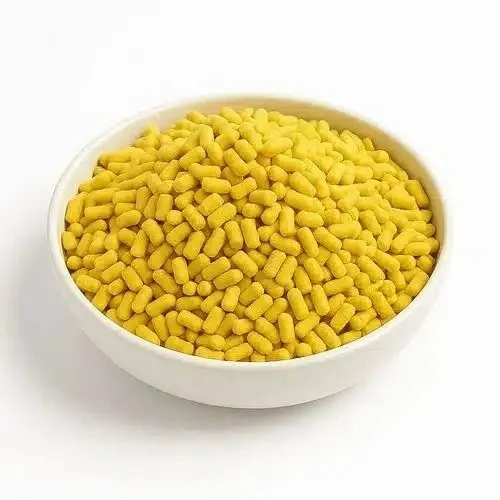
Sodium Isoamyl Xanthate (SIAX) CAS 2540-36-5 | Selective Flotation Collector
Bitop Bihope Qingdao Mining Co., Ltd. is one of the most reliable manufacturers and suppliers of sodium isoamyl xanthate (siax) cas 2540-36-5 | selective flotation collector in China, also supports customized service with low price. If you're going to buy advanced sodium isoamyl xanthate (siax) cas 2540-36-5 | selective flotation collector made in China, welcome to get pricelist and free sample from our factory.
1. Product Identity
Sodium isoamyl xanthate, often abbreviated SIAX (also seen as SIPX), is the branched-chain isomer of sodium amyl xanthate. The product is also named sodium O-isopentyl dithiocarbonate and carries CAS number 2540-36-5. Molecular formula C6H11NaOS2, molecular weight 186.27. In China it is produced against the mining reagent standard YS/T 487-2005. Transport classification is Class 4.2 with UN number 3342, and the HS code is 2930902000.
2. What the Branched Chain Changes
Isoamyl and n-amyl xanthate share the same formula and the same molecular weight; the only difference lies in the alkyl group, where isoamyl is a 3-methylbutyl branch rather than a straight chain. That branch alters how the molecule packs onto a mineral surface, so the reagent keeps strong collecting power while behaving more selectively towards different sulphide minerals. Published flotation studies on oxidised lead ores show that branched and straight-chain xanthates do not rank the same way across mineral species. In copper-lead-zinc circuits, isoamyl grades are therefore usually placed in cleaning and separation stages, where the goals are higher concentrate grade and less gangue reporting to the froth.
3. Physical and Chemical Properties
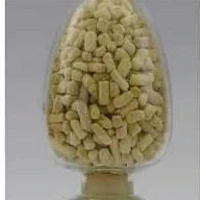
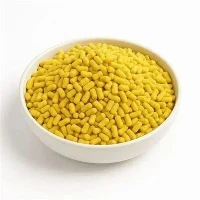
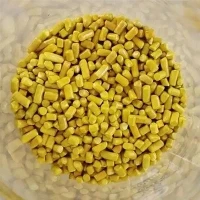
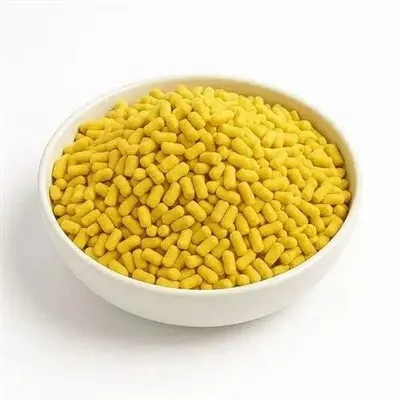
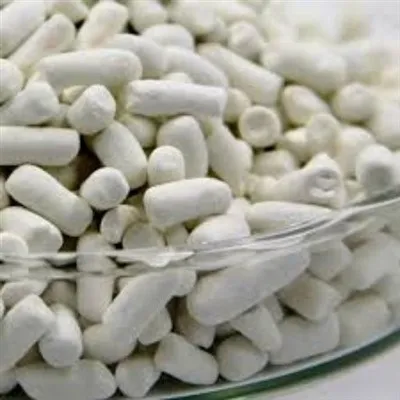
The material appears as pale yellow, yellow-green or light grey-white powder or rod-shaped granules; dried grades are lighter in colour while synthetic wet grades look darker. It has an intense, volatile thiol odour. Solubility in water is high, and it also dissolves in methanol and ethanol, but not in kerosene or other hydrocarbons. The aqueous solution is weakly alkaline. The solid is strongly hygroscopic and cakes on moisture uptake, which also accelerates decomposition. Dry sealed material is stable at ambient temperature; decomposition becomes significant above 60 °C, is rapid in strong acid with release of carbon disulphide and hydrogen sulphide, and is caused by strong oxidisers such as hydrogen peroxide or bleaching powder. Working solutions should be prepared fresh.
4. Specifications
|
Parameter |
Dried premium |
Grade 1 synthetic |
Technical |
|
Active content, % min |
90.0 |
80.0 |
76.0 |
|
Free alkali (as NaOH), % max |
0.2 |
0.5 |
0.5 |
|
Moisture and volatiles, % max |
4.0 |
10.0 |
12.0 |
|
Appearance |
Pale yellow powder / pellet |
Yellow powder / pellet |
Yellow powder / pellet |
The three grades cover different logistics: dried premium suits long-distance shipment and purity-sensitive circuits, while the synthetic and technical grades fit plants that buy locally and consume quickly.
5. Applications
Differential flotation of copper-lead-zinc sulphide ores, typically in cleaning stages to lift concentrate grade;
Copper-nickel sulphide flotation, with consistent collection of pentlandite;
Gold-bearing pyrite and gold-silver sulphide ores where both recovery and selectivity matter;
Oxidised copper and lead-zinc ores after sodium sulphide conditioning, as well as malachite, azurite, smithsonite and related oxidised minerals;
As an auxiliary collector in selected non-sulphide circuits.
Compared with the straight-chain grade, SIAX floats a little more slowly but more steadily, giving a froth that is easier to control and a concentrate grade that is easier to hold. That makes it a good fit where gangue depression and reduced circulating load are the priorities. On very refractory, dense, high-sulphur ores where recovery dominates everything else, n-amyl xanthate remains the stronger choice, and many plants run both: n-amyl in roughing and scavenging for recovery, isoamyl in cleaning for grade.
6. Recommended Practice
The reagent works across pH 7–11, with weakly alkaline to mildly alkaline pulps performing best. Dosage varies with ore mineralogy; a reasonable starting point for bench work is 20–120 g/t. Prepare a 1–5% solution and add it evenly to the conditioning tank or the flotation feed point. When the reagent is used with sodium sulphide on oxidised ores, complete the sulphidisation step before adding xanthate, otherwise oxidising species in the pulp will consume the collector. Blends with dithiophosphates, thionocarbamates and frothers are common where a more selective reagent scheme is required.
7. Packaging, Storage and Transport
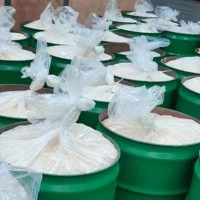
Standard packing options include 25–50 kg woven bags, 110–180 kg steel drums, 850 kg wooden cases and bulk bags, with custom packing on request. Store in a ventilated, cool, dry place away from moisture, direct sunlight and ignition sources, and keep it segregated from acids, oxidising agents and toxic materials. Use opened bags promptly and reseal the remainder. Shelf life in sealed dry storage is generally 12 months. Ship as a Class 4.2 dangerous good, protected from rain and heat.
8. Safety
Dust irritates the respiratory tract, skin and cornea, and repeated exposure can cause dermatitis. Wear a dust mask, protective gloves and goggles, and ventilate the working area. Flush affected skin or eyes with plenty of water and seek medical attention after ingestion. Carbon disulphide vapour released on moisture or acid contact is flammable and toxic, so no smoking or open flames near storage and dosing points. Collect spillage with sand or inert absorbent; do not discharge to drains or watercourses.
9. FAQ
Can SIAX and SAX be used together? Yes. Running straight-chain xanthate in roughing and isoamyl in cleaning is a common arrangement. Test the split on your own ore before changing reagent points.
Why does the isoamyl grade sometimes need a higher dosage? Branched xanthates float more gradually, so reaching the same recovery can take slightly more reagent - usually offset by steadier froth and better grade control.
Is caked material still usable? Lightly caked lots can be broken up and used promptly, though active content will have dropped. Heavily caked or unusually pungent lots should be re-assayed before dosing.
Hot Tags: sodium isoamyl xanthate (siax) cas 2540-36-5 | selective flotation collector, China sodium isoamyl xanthate (siax) cas 2540-36-5 | selective flotation collector manufacturers, factory
You Might Also Like
Send Inquiry