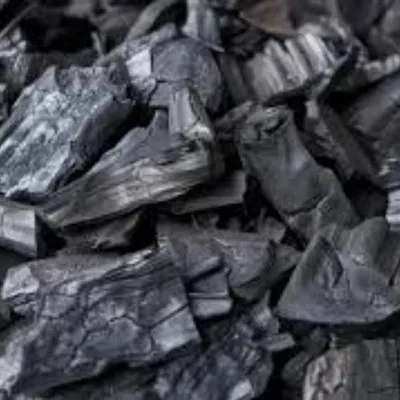
Yo, folks! As a xanthate supplier, I often get asked, "What's the chemical formula of xanthate?" Well, let's dive right into it and break down this topic in a simple way.
What is Xanthate?
First off, xanthates are a group of chemical compounds. They're super important in the mining industry, mainly used as collectors in the froth flotation process to separate valuable minerals from gangue. That's a fancy way of saying they help us pull out the good stuff from the rocks.
Xanthates are formed by the reaction of an alcohol, carbon disulfide (CS₂), and a base. This reaction leads to the creation of salts with the general structure of ROCS₂⁻ M⁺, where R is an alkyl or aryl group, M is a metal cation (usually sodium or potassium), and the negative charge on the dithiocarbonate group is balanced by the positively - charged metal ion.
Chemical Formula Basics
The general chemical formula for xanthates is actually quite straightforward. If you look at it, xanthates fall under the category of organosulfur compounds. The backbone of xanthate is the R - O - C(=S) - S⁻ moiety. The "R" group is what gives different xanthates their unique properties.
For example, if the "R" group is an ethyl group (C₂H₅), and the metal is potassium, we get Potassium Ethyl Xanthate. Its chemical formula is C₂H₅OCS₂K. You can think of it like this: the ethyl group (C₂H₅) is connected to an oxygen atom, which is then bonded to a carbon - sulfur double - bond and a sulfur atom. The potassium ion (K⁺) helps to balance the charge of the whole thing.
Different Types of Xanthates and Their Formulas
Let's talk about some of the common types of xanthates that we supply.
1. Potassium Ethyl Xanthate
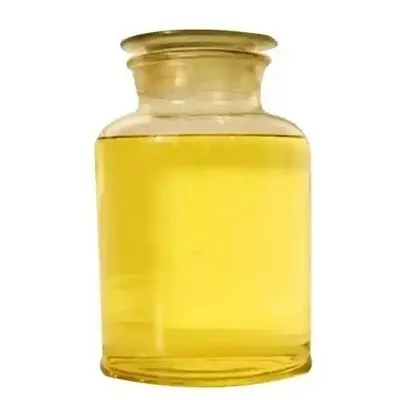
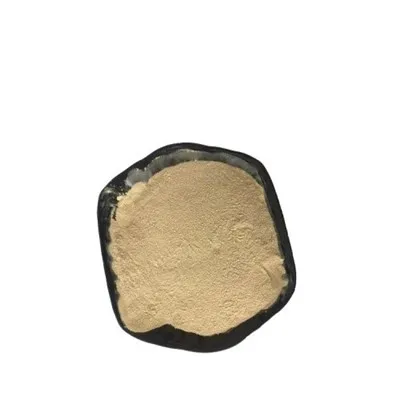
As mentioned earlier, Potassium Ethyl Xanthate has the chemical formula C₂H₅OCS₂K. It's a widely used xanthate in the mining industry, especially for the flotation of copper, lead, and zinc sulfide minerals. It's a white to yellowish powder that can sometimes look a bit like sand.
2. Sodium Isobutyl Xanthate
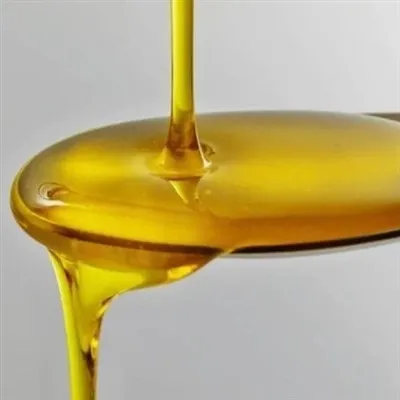
Now, Sodium Isobutyl Xanthate has a formula of C₄H₉OCS₂Na. The "isobutyl" part (C₄H₉) tells us about the alkyl group attached to the oxygen atom. It's a colorless to pale yellow liquid or powder and is often used for the selective flotation of copper, lead, and zinc sulfide ores.
3. Sodium Isopropyl Xanthate
Sodium Isopropyl Xanthate has the chemical formula C₃H₇OCS₂Na. The isopropyl group (C₃H₇) is a bit smaller than the isobutyl one. This xanthate is also used in froth flotation, particularly for copper and zinc sulfide minerals. It's known for its good solubility and reactivity.
4. Sodium Isoamyl Xanthate
Sodium Isoamyl Xanthate has the formula C₅H₁₁OCS₂Na. The isoamyl group (C₅H₁₁) makes it a bit more complex compared to the previous ones. It's a popular choice for the flotation of a wide range of sulfide minerals because of its strong collecting ability.
5. Potassium Butyl Xanthate
Lastly, Potassium Butyl Xanthate has the chemical formula C₄H₉OCS₂K. The butyl group (C₄H₉) gives it similar properties to the isobutyl version, but the straight - chain structure can lead to some differences in its performance during flotation.
How the Formula Affects Performance
The chemical formula of xanthate directly influences its performance in the mining process. The size and structure of the "R" group can determine things like solubility, collecting power, and selectivity.
For instance, larger "R" groups generally make the xanthate less soluble in water but more effective at collecting minerals. This is because the larger alkyl chains can form stronger bonds with the mineral surfaces. On the other hand, smaller "R" groups lead to better solubility but might have a slightly lower collecting power.
The metal cation (sodium or potassium) also plays a role. Potassium xanthates are often more stable and have better performance in some cases, while sodium xanthates are usually more soluble and can be easier to handle in certain situations.
Our Role as a Supplier
We, as a xanthate supplier, understand the importance of getting the right xanthate with the right formula for our clients. We make sure that our products are of high quality and meet the specific requirements of different mining operations.
Whether you're working on a small - scale mining project or a large - scale industrial operation, we've got the xanthate you need. We can provide detailed technical support to help you choose the best xanthate based on the type of minerals you're trying to extract and the conditions of your flotation process.
Why Choose Our Xanthates?
Our xanthates are produced using the latest manufacturing processes, which ensures consistent quality and performance. We also conduct strict quality control tests to make sure that every batch meets the highest standards.
We know that the mining industry is all about efficiency and cost - effectiveness. That's why we offer competitive prices without compromising on the quality of our xanthates. We're committed to building long - term relationships with our clients by providing excellent customer service and reliable products.
Let's Connect
If you're in the market for xanthates and want to learn more about which one is right for your mining operation, we'd love to hear from you. We can have a chat about your specific needs, provide samples for testing, and work out a deal that suits you.
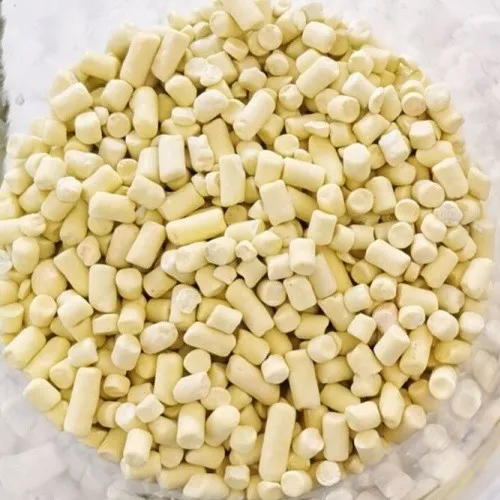

Don't hesitate to reach out and start a conversation. Whether it's about the chemical formula, the performance of different xanthates, or anything else related to our products, we're here to help.
References
- "Mineral Processing Design and Operations: An Introduction" by Barry A. Wills and Tim Napier - Munn.
- "Flotation: A Century of Innovation" by R. P. King.